
When the JK Industrial Package worth Rs 28,400 crore was announced for Jammu and Kashmir’s industrial landscape back in 2019, few could have predicted just how successful it would become. Fast forward to late 2024, and the region finds itself in an enviable but challenging position: the JK Industrial Package has been completely exhausted, nearly 600 applications are pending, and investors from across India and abroad are eagerly waiting. The solution? A crucial Apex Committee review scheduled for December that could reshape the industrial future of the Union Territory and potentially lead to an extension of the JK Industrial Package.
Source: Apex Comm meeting on raising JK Industrial Package in Dec” (November 22
Let me walk you through what’s happening, why it matters, and what it means for everyone from local entrepreneurs to international investors eyeing opportunities in this historically troubled yet increasingly promising region.
The Unprecedented Success of the Original Package
To understand where we’re headed, we need to appreciate where we’ve been. The New Central Sector Scheme (NCSS), launched in April 2021 with a total outlay of Rs 28,400 crore, was designed to run until 2037. The scheme wasn’t just about throwing money at the problem it was carefully structured to incentivize both manufacturing and service sector units across Jammu and Kashmir.
Here’s what made it attractive: the package offered capital investment incentives ranging from 30% to 50% depending on the zone, capital interest subvention at 6% annually for up to seven years, GST-linked incentives, and working capital interest support. For smaller units investing up to Rs 50 crore, the scheme was particularly generous, offering capital incentives up to Rs 7.5 crore.
The response was nothing short of remarkable. According to official figures, 971 industrial investment proposals were approved under the scheme, representing a total investment of Rs 10,471 crore and creating employment for approximately 51,897 people. But here’s the catch: the entire Rs 28,400 crore allocation has been fully subscribed, and nearly 300 more proposals are sitting in the pipeline, waiting for approval.
Why the Package Worked So Well
Several factors contributed to this overwhelming success. First, the scheme was genuinely investor-friendly. Unlike previous industrial policies that offered multiple small incentives with heavy compliance burdens, the NCSS streamlined processes and focused on major incentives like the GST-linked benefit, which reduced paperwork while maintaining transparency.
Second, the timing was right. After years of uncertainty and security concerns, Jammu and Kashmir’s reorganization as a Union Territory in 2019 brought a new administrative focus on economic development. The improved security situation made investors more confident about committing capital.
Third, the scheme’s block-level approach was innovative. For the first time in any central government industrial scheme, development was pushed down to the block level, ensuring that remote areas of Jammu and Kashmir could attract investment. This wasn’t just about creating industrial zones in Jammu and Srinagar it was about spreading prosperity across the entire region.
The data backs this up. Since 2019, Jammu and Kashmir has witnessed 1,984 new industrial units coming up, generating 63,710 jobs and attracting Rs 9,606.46 crore in investments. In the fiscal year 2024-25 alone, 334 new industrial units were established with an investment of Rs 2,977 crore, creating 8,443 jobs.
Source: J&K receives Rs 1.63 lakh crore investment proposals till Dec 2024: ESR” (March 9
The December Apex Committee Meeting: What’s at Stake
Source: Dailyexcelsior.com
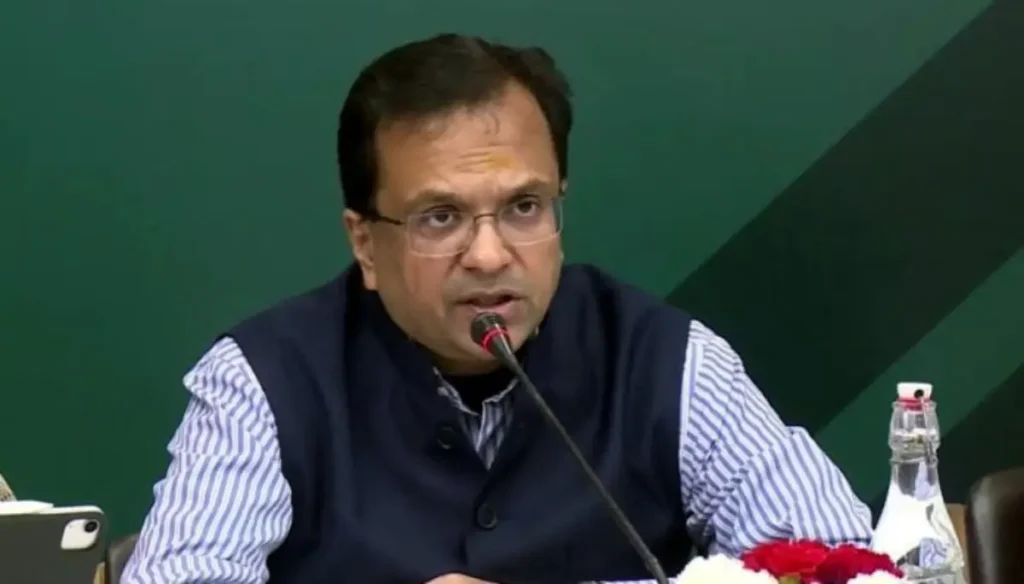
Now comes the crucial part. The Union Home Ministry is set to review the industrial package in the first week of December through an Apex Committee level meeting, with expectations running high that the package could be substantially increased.
The process is structured in two stages. First, Union Home Secretary Govind Mohan will chair a preliminary meeting with top officials from the Jammu and Kashmir administration to discuss all aspects of the industrial package. This will be followed by the main Apex Committee meeting, headed by Union Home Minister Amit Shah and including Industry and Commerce Minister Piyush Goyal, Lieutenant Governor Manoj Sinha, and senior officers from the Ministry of Home Affairs, Commerce Ministry, and the UT administration.
If the proposal receives approval from the Apex Committee, it will proceed to the Union Cabinet for final clearance. The stakes are enormous. Lieutenant Governor Manoj Sinha has proposed raising the industrial package amount from Rs 28,400 crore to a staggering Rs 75,000 crore nearly a threefold increase.
Why such a massive jump? Because the demand is there. Recent data shows that 8,306 new applications have been received with a proposed total investment of Rs 1.63 lakh crore and the potential to create employment for approximately 5.90 lakh individuals. These aren’t just small mom-and-pop operations either. Jammu and Kashmir has started attracting large-scale industries with investments exceeding Rs 500 crore, which catalyze the development of ancillary industries and enhance local employment.
Read more: Antilia: Mukesh Ambani’s House Price, Address, Pictures, and Net Worth
The Real-World Impact: Beyond the Numbers
Let me share what these numbers mean in practical terms. During a recent fifth investor meeting at the Convention Center, industry leaders highlighted the urgency of extending the package. The message was clear: without an expanded package, investor confidence could wane and ongoing projects might be derailed.
Consider this scenario: A manufacturing company from Pune has completed all due diligence, identified a location in Jammu, hired local consultants, and is ready to invest Rs 200 crore in a facility that would employ 500 people. Their application is complete and meets all requirements. But they’re stuck in the queue because the fund is exhausted. Multiply this by 300 pending applications, and you begin to see why this December meeting is so critical.
The Federation of Chambers of Industries Kashmir (FCIK) recently presented a 10-point plan to Chief Minister Omar Abdullah, committing to generate 60,000 jobs annually in exchange for necessary government support. Their proposals included focusing on reviving and scaling up existing units through modernization and technological upgrades, addressing sluggish credit flow to MSMEs, and improving industrial infrastructure.
Structural Challenges That Need Addressing
While the industrial package expansion is crucial, it’s not the complete solution. Several systemic issues need attention. Industry associations have raised concerns about the confusion caused by three different industrial policies operating simultaneously for new and existing units. There’s also the matter of delayed incentive payments officials have acknowledged that incentives worth over Rs 250 crores to industrial unit holders remain pending, with some claims stuck at the treasury level despite funds being allocated.
The introduction of the Government e-Marketplace (GeM) portal, while promoting transparency, has inadvertently hurt local MSME units that previously enjoyed purchase preferences. Before GeM, local industrial areas like SICOP had an approximate turnover of Rs 800 crores, but this has declined significantly, affecting the financial health of the state industrial corporation.
These aren’t minor administrative hiccups they’re real obstacles that affect whether businesses survive or close down. About 205 applications from local prospective investors, including units under substantial expansion, applied for registration under the NCSS portal before the September 30, 2024 deadline. They’re still waiting for registration approval, caught in bureaucratic limbo while trying to compete with newer, better-funded units.
What Makes J&K Attractive for Industrial Investment
Despite these challenges, Jammu and Kashmir’s industrial future looks promising for several reasons. The Union Territory has made significant progress in ease of doing business, becoming the first UT to integrate its National Single Window Portal with the national platform. The region achieved 97 percent compliance with the Business Reform Action Plan (BRAP), with 341 out of 352 reforms approved.
The government has also introduced complementary policies that strengthen the industrial ecosystem. The Draft Procurement Preference Policy for Micro and Small Enterprises (MSEs) for 2024 aims to channel 30% of government procurement to registered local MSEs, offering them a 25% price preference over non-registered suppliers. This isn’t charity it’s smart industrial policy that helps local businesses build capacity and compete.
The startup ecosystem has exploded, with DPIIT-registered startups increasing from 237 in 2020 to 917 in 2024, representing a remarkable 287% growth. Over 1,600 startups have registered with the Entrepreneurship Development Institute (EDI), marking a threefold rise. The J&K Startup Policy 2024-27 and the dedicated J&K startup portal launched in July 2024 provide strong fiscal and non-fiscal support.
Even traditional sectors are rebounding. Handicraft exports reached Rs 1,162.29 crore in 2023-24, doubling from 2021-22 levels. This shows that industrial development doesn’t have to come at the expense of traditional crafts both can thrive together.
Source: J&K receives Rs 1.63 lakh crore investment proposals till Dec 2024: ESR” (March 9,
Infrastructure Development: Building for the Future
To support this industrial expansion, the government is developing 46 new industrial estates, requiring 79,137 kanals of land. This isn’t paper planning—PSUs like NBCC, IRCON, and CPWD are actively handling the infrastructure development work. These aren’t just plots of land; they’re comprehensive industrial zones with power, water, roads, and digital connectivity.
The budget allocations reflect this commitment. In 2024-25, Rs 923 crore was allocated for development and upgradation of industrial estates, GST refund incentives, incentives under the Industrial Policy, and promotion of trade through events organized by the Jammu and Kashmir Trade Promotion Organisation (JKTPO) to boost investment and employment.
The Path Forward: What Needs to Happen
As we approach the December Apex Committee meeting, several things need to fall into place. First, the Union government needs to approve the package expansion. Given the demonstrated demand and the strategic importance of Jammu and Kashmir’s economic development, there are good reasons to be optimistic. Sources indicate positive signals, though nothing is certain until the Cabinet gives its final nod.
Second, any expanded package must learn from the implementation challenges of the current scheme. Faster processing of applications, quicker disbursement of approved incentives, resolution of pending claims, and better coordination between different government departments will be essential. A Rs 75,000 crore package is only effective if the money actually reaches eligible businesses in a timely manner.
Third, the administration needs to address the concerns raised by existing industrial units. These aren’t competitors to new investments they’re the foundation of the industrial ecosystem. Many have been operating for 20 years, employing local workers, paying taxes, and mentoring entrepreneurs. Their viability matters as much as attracting new investment.
Source:
The Bigger Picture: Economic Transformation
What’s happening in Jammu and Kashmir isn’t just about industrial policy it’s about economic transformation. For decades, the region’s economy was heavily dependent on government employment, agriculture, and tourism. While these remain important, diversification through manufacturing and services creates resilience.
When a pharmaceutical company sets up in Jammu, it doesn’t just create jobs at the factory. It needs security services, catering, transportation, packaging supplies, legal services, accounting firms, and more. When a food processing unit opens in Kashmir, it creates demand for raw materials from farmers, trucking services, quality testing labs, and marketing agencies. This multiplier effect is how regions truly develop.
The original package was projected to create employment for 4.5 lakh people directly and indirectly. If the expansion goes through and the pending applications are approved, we could be looking at employment opportunities for well over a million people over the next decade. For a Union Territory where youth unemployment has been a persistent concern, these numbers represent hope, opportunity, and dignity.
Check more: Houses for Sale in Chandigarh Find Your Perfect Home Today
International Interest and Competitive Positioning
Interestingly, the success of Jammu and Kashmir’s industrial package has attracted international attention. Investors from Dubai and other global locations have shown interest in setting up operations in the region. This international validation is crucial—it signals that J&K isn’t just a domestic investment story but can compete globally for certain types of manufacturing and services.
The region has natural advantages: proximity to both domestic and international markets, abundant water and renewable energy potential, a educated workforce, and preferential treatment under various government schemes. What it needs is continued policy support, infrastructure development, and most importantly, the capital to fuel growth which is exactly what the expanded industrial package could provide.
Conclusion: A Critical Juncture
As December’s Apex Committee meeting approaches, Jammu and Kashmir stands at a critical juncture. The overwhelming success of the Rs 28,400 crore industrial package has exceeded all expectations, proving that with the right incentives and improved security conditions, the region can attract substantial investment and create large-scale employment.
The nearly 600 pending applications and Rs 1.63 lakh crore in investment proposals show that this isn’t a bubble or temporary enthusiasm it’s sustained, serious interest from businesses that see real opportunities. The proposed expansion to Rs 75,000 crore isn’t excessive when viewed against this demand; it’s a pragmatic response to market realities.
However, success isn’t guaranteed. The Apex Committee must approve the proposal, the Cabinet must sanction it, and most crucially, the administrative machinery must be equipped to handle the scale and complexity of implementation. Existing bottlenecks in incentive disbursement and application processing need urgent resolution.
For the people of Jammu and Kashmir, this December meeting represents more than policy deliberations it represents the difference between stagnation and growth, between limited opportunities and expanding possibilities. Industry leaders, local entrepreneurs, prospective investors, and most importantly, the thousands of young people seeking meaningful employment are all watching carefully.
The next few weeks will reveal whether India’s commitment to Jammu and Kashmir’s economic development matches its rhetoric. If the Apex Committee delivers, the region could be on the verge of an industrial transformation that would have seemed impossible just a few years ago. If not, the opportunity and the optimism could begin to fade.
All eyes are now on Delhi, as they should be. The decision made in those committee rooms will reverberate through the valleys, plains, and mountains of Jammu and Kashmir for decades to come.