
By Sundhanshu Pathania
📅 Published on January 10, 2026
⏱️ Updated on January 10, 2026 | 3:45 PM IST

Introduction: What Changed in Early 2026
In early 2026, a noticeable shift is playing out across India’s major residential markets. Property buyers in cities such as Mumbai, Bengaluru, and Delhi NCR are increasingly asking for complete documentation details before scheduling site visits or entering price negotiations. Until recently, paperwork discussions usually happened much later in the buying process.
This change has not been triggered by a sudden price correction or a new regulation. Instead, it reflects lessons learned over the past few years. Delayed registrations, loan rejections due to missing approvals, and resale complications have made buyers more cautious. Property purchase documentation is no longer viewed as a backend formality. For many buyers, it has become the first checkpoint.
The question is not whether buyers are interested in property. It is whether they are comfortable proceeding without legal clarity.
What’s Powering the Real Estate Industry’s Renewed Momentum in the Property Market Indian real estate market momentum
What Actually Changed: Documentation Moved Up the Decision Chain
This shift is not anecdotal alone. Over the last 12 to 18 months, documentation-related issues have increasingly featured among the main reasons property transactions slow down or fail to close.
Registration departments such as the Maharashtra Inspector General of Registration (IGR) have repeatedly highlighted document clarification as a frequent cause of delayed registrations. At the same time, lenders have tightened scrutiny around title history, approved plans, and occupancy status before releasing funds.
On the ground, this has translated into visible behaviour changes:
- Buyers request title and approval documents before paying token amounts
- Home loan officers seek clearer documentation earlier in the sanction process
- Projects with complete approvals close faster than comparable projects without them
The result is simple but important: documentation quality now directly affects transaction speed.
Data Signals Buyers Are Responding To
While there is no single national dataset tracking buyer document queries, multiple official and institutional signals explain why scrutiny has increased.
- Maharashtra RERA portals continue to record buyer complaints related to delayed possession and incomplete compliance disclosures, reinforcing the importance of verification before commitment.
- State registration portals, including IGR Maharashtra, note that document mismatches and missing approvals are a common reason for pending registrations.
- Reserve Bank of India and National Housing Bank publications on housing finance consistently emphasise lender responsibility around title verification and legal compliance before loan disbursement.
Together, these signals explain why buyers are front-loading due diligence rather than reacting late.
Essential Documents for Property Purchase in India
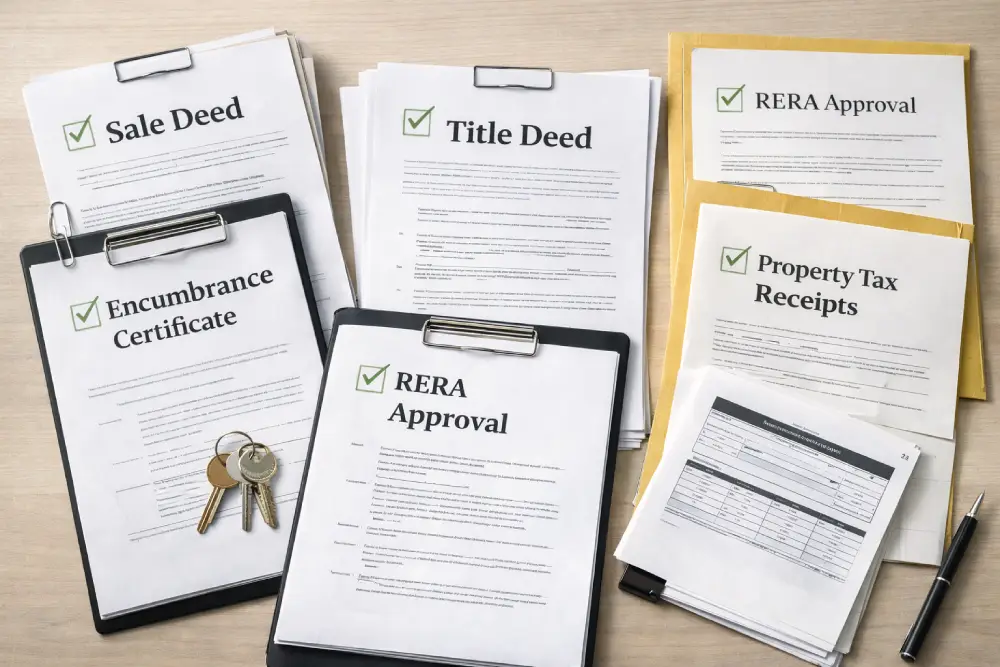
Understanding the legal documents involved in a property transaction is critical. While requirements vary slightly by state, the following paperwork applies to most residential purchases.
Sale Deed (Registered)
The registered sale deed is the legal instrument transferring ownership. Registration at the local sub-registrar office is mandatory. Without it, ownership is incomplete.
Title Deed and Chain of Ownership
These establish the seller’s legal right to sell the property. Buyers should verify ownership history to ensure there are no disputes, gaps, or conflicting claims.
Encumbrance Certificate
This confirms whether the property carries existing liabilities such as loans, court cases, or legal claims.
Approved Building Plan
Issued by the local planning authority, this confirms the structure complies with sanctioned plans. Deviations can cause legal and resale issues later.
Completion Certificate and Occupancy Certificate
These certify that construction has been completed as approved and that the property is fit for occupation. Missing occupancy certificates can affect utilities, resale, and loan eligibility.
RERA Registration Details
For under-construction projects, buyers should independently verify registration details on the official RERA portal applicable to the state.
Property Tax Receipts
Municipal tax dues must be cleared before purchase. Pending dues can legally transfer to the new owner.
Why Mumbai Buyers Are Leading This Documentation Shift
Mumbai has emerged as a clear example of why documentation scrutiny matters.
Property transactions in Mumbai often involve higher ticket sizes, older buildings, and redevelopment projects with complex ownership histories. Documentation mistakes here are expensive and difficult to correct after purchase.
Several local factors amplify the importance of paperwork in Mumbai real estate:
- A large share of redevelopment projects with layered title histories
- Older housing stock requiring deeper legal verification
- Significant NRI participation, where buyers rely entirely on documentation
- Stricter lender scrutiny due to premium transaction values
A Mumbai-based property lawyer who handles residential transactions explains the trend plainly:
“Most disputes we see today are not about pricing. They’re about missing approvals or incomplete title histories. Buyers have learned that exiting a property later becomes extremely difficult if paperwork isn’t clean.”
A senior home loan officer at a private sector bank adds:
“Loan turnaround time depends heavily on documentation quality. Clear titles and approvals move faster. Files with gaps don’t.”
Legal documentation and verification processes can vary by city, especially in high-activity markets like Mumbai real estate price trends and the fast-growing Mohali real estate market 2026.
What Property Documentation Actually Costs
Buyers often underestimate the cost of proper verification.
Typical expenses include:
- Stamp duty and registration charges (state-specific)
- Legal due diligence fees, commonly ranging between ₹15,000 and ₹50,000 depending on complexity
- Charges for certified copies and document searches
These costs are not optional. They function as insurance against much larger future risks.
According to recent data published by the Reserve Bank of India (RBI), mortgage rates…
How Long Verification Usually Takes
Timelines matter, especially when negotiations are underway.
- Initial document review: approximately 7–10 days
- Full title and approval verification: typically 2–4 weeks
- Loan-linked verification may extend timelines further
Best practice is to start verification before finalising price discussions. Waiting until after money changes hands compresses timelines and increases pressure.
Red Flags: When Buyers Should Walk Away
Certain warning signs are difficult or impossible to fix later:
- Seller avoids sharing title documents upfront
- Occupancy certificate missing for a long-occupied building
- Property not traceable on official land records
- Multiple owners without clear consent documentation
- Active disputes revealed through encumbrance records
Walking away early is often cheaper than resolving legal problems later.
State-Specific Variations Buyers Must Account For
Property documentation rules vary by state.
For example:
- Maharashtra relies on IGR and state RERA systems for registration and compliance
- Other states operate through different revenue and planning authorities
Buyers should always confirm local requirements instead of assuming uniform rules nationwide.
Frequently Asked Questions
Does documentation still matter if a project is RERA-registered?
Yes. RERA improves transparency but does not replace title verification, approvals, or occupancy certificates.
When should buyers begin document verification?
Ideally before paying any token amount. Legal verification often takes weeks.
Are document requirements the same across all Indian states?
No. Core documents are similar, but processes and authorities vary by state.
Can missing documents affect resale value?
Yes. Properties with unclear titles or missing approvals often face lower demand and longer resale timelines.
Next Steps for Property Buyers
Before making an offer:
- Request a complete document checklist from the seller
- Engage a qualified property lawyer for title verification
- Verify RERA registration on the official state portal
- Check property tax status with the local municipal authority
Property buying is a financial decision. Documentation is the risk filter.
Final Thoughts
The increased focus on property documentation in early 2026 does not reflect fear or hesitation. It reflects maturity.
Buyers today are better informed and more aware of long-term consequences. Clean paperwork does not slow transactions. It protects them.
In the current market, legal clarity is not a technical detail. It is value.