
Opening: What’s Really Happening in Mumbai Real Estate?
The Mumbai real estate market is often described using dramatic terms — “comeback”, “boom”, or “rebound”. But when we step away from headlines and look at actual data from 2023–2025, the picture that emerges is more measured.
Rather than a sharp surge, Mumbai has seen a phase of price stabilisation with selective growth. Property registrations have improved, transaction volumes have held steady, and buyer participation has widened — but without the runaway price jumps seen in earlier cycles.
According to Maharashtra government registration data reported by Hindustan Times, Mumbai recorded approximately 1.5 lakh property registrations in 2024, a modest increase over 2023. This signals improved activity, but not speculative excess.
So the real question is not whether Mumbai real estate is “booming”, but whether the current stability is sustainable.
Let’s examine the numbers, sources, and risks.
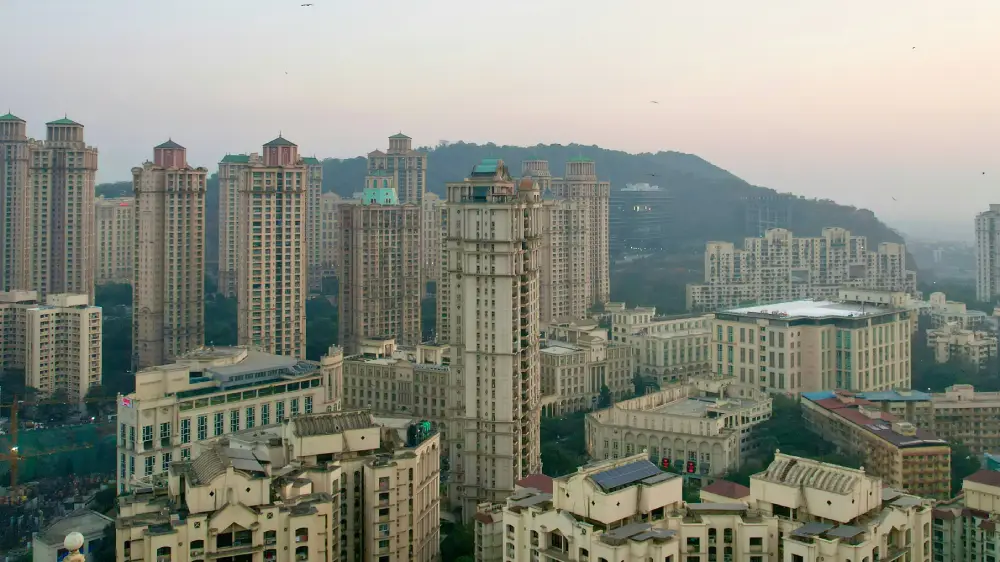
What the Data Shows: Prices, Volumes, and Timeline
This was not a sudden rebound.
Price Trends (2023–2025)
According to Knight Frank India’s Residential Market Update 2024:
- Average residential prices in Mumbai rose around 5–7% year-on-year.
- South Mumbai saw low single-digit appreciation.
- Western suburbs (Andheri–Borivali belt) saw mid single-digit growth.
- Peripheral locations largely remained range-bound
Importantly, prices did not recover uniformly across the city.
This indicates consolidation, not a speculative rally.
Transaction Volumes
As per data from the Maharashtra Inspector General of Registration (IGR):
- Monthly registrations averaged 12,000–13,000 units in 2024
- This was higher than 2023, but still below the 2021 peak
- Demand was strongest for ready-to-move properties.
This suggests buyers were active, but cautious.
Timeline of Improvement
Market activity improved gradually over 6–9 months, beginning in mid-2024. There was no single trigger event — instead, confidence returned slowly as interest rates stabilised and job markets remained resilient.
For a deeper look at emerging patterns in Indian real estate, see our analysis on the Mohali real estate market in 2026
Who Is Actually Buying? (End-Users vs Investors)
End-Users Dominate
According to Anarock Property Consultants and 99acres Research (2024 reports):
- Over 70% of Mumbai home purchases were end-user driven.
- Most transactions fell in the ₹1.5–4 crore bracket.
- Speculative buying remained limited due to high entry costs.
Anuj Puri, Chairman of Anarock, noted in a 2024 interview:
“Mumbai’s current cycle is driven more by genuine housing demand than by speculative capital.”
This explains why volumes improved without sharp price inflation.
Investor Activity Is Selective
Institutional and high-net-worth investors focused mainly on:
- Redevelopment projects
- Commercial assets
- Rental-yield-oriented residential units
There is no evidence of broad speculative inflows, which keeps volatility low — but also limits rapid appreciation.
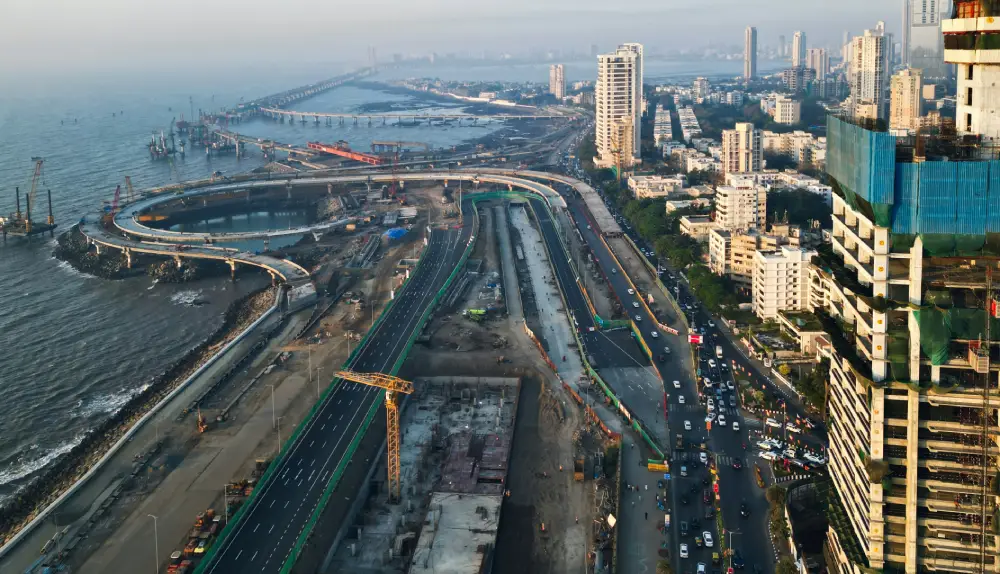
Infrastructure Impact: Sentiment Booster, Not Price Trigger
Major projects such as:
- Metro Line expansions
- Coastal Road (partial sections)
- Road upgrades in the western suburbs
have improved connectivity and commute predictability.
However, experts caution against overestimating short-term price impact.
Shishir Baijal, CMD of Knight Frank India, stated:
“Infrastructure improves absorption and buyer confidence, but sustained price growth depends on income expansion and affordability.”
In short, infrastructure supports demand — it does not automatically push prices higher.
If you’re planning to buy, sell, or invest in property, speak directly with our real estate consultant for personalised guidance.
How Mumbai Compares With Other Indian Cities
| Mumbai | ~5–7% | Very High | Low volatility |
| Bengaluru | ~6–8% | Medium | IT-cycle dependent |
| Pune | ~5–6% | Medium | End-user driven |
| Hyderabad | ~4–6% | Medium | Supply-heavy |
(Source: Knight Frank & Anarock reports)
Mumbai remains capital-intensive but structurally stable, unlike faster-growing but more volatile markets.
Risks That Are Often Downplayed
A balanced analysis must include downside risks.
1) Affordability Pressure
Mumbai has one of India’s highest price-to-income ratios, limiting first-time buyer participation.
2) Segment-Specific Oversupply
Certain luxury and peripheral segments face 20–24 months of inventory overhang, according to Anarock.
3) Interest Rate Sensitivity
Any prolonged high-rate environment could delay upgrades and suppress demand.
4) Job Market Dependency
Housing demand is closely tied to BFSI, corporate services, and media sectors.
A slowdown here would directly impact absorption.
What This Market Is — And Isn’t
Let’s be precise.
- This is not a speculative boom
- This is not a crash-recovery rally
- This is a consolidation phase with selective growth
As Knight Frank described in its 2024 outlook:
“Mumbai is in a mature phase where stability matters more than acceleration.”
Final Assessment: What Should Buyers and Investors Do?
- End-users: Reasonable time to buy if affordability aligns
- Investors: Focus on rental yield and asset quality
- Speculators: Limited upside in the near term
Mumbai real estate continues to reward capital discipline and long-term planning, not hype-driven decisions.
Verifiable Sources
- Hindustan Times – Mumbai property registrations
- Knight Frank India – Residential Market Updates
- Anarock Property Consultants – Market analysis
- 99acres Research & Insights
- Maharashtra Inspector General of Registration (IGR)
Final Word
Mumbai real estate is not “soaring” — it is stabilising.
And in a market as large and complex as Mumbai, stability itself is meaningful.