
Opening
So invest in Mohali just delivered another eye-catching move, and if you’ve been tracking North India’s real estate chatter, you’ve probably felt it too. Average residential prices in Mohali are hovering around ₹5,500–₹7,500 per sq. ft. right now, depending on the sector and project quality, and people are starting to get excited and speculate in the investor and homebuyer community. But what exactly triggered this rebound?
Is this renewed energy going to push Mohali property values toward ₹1 crore for premium 3BHKs in key sectors? And what are the next things to watch by first-time buyers, NRIs, and long-term investors?
Let’s break it all down.
What Actually Went Down: What the Market Shows
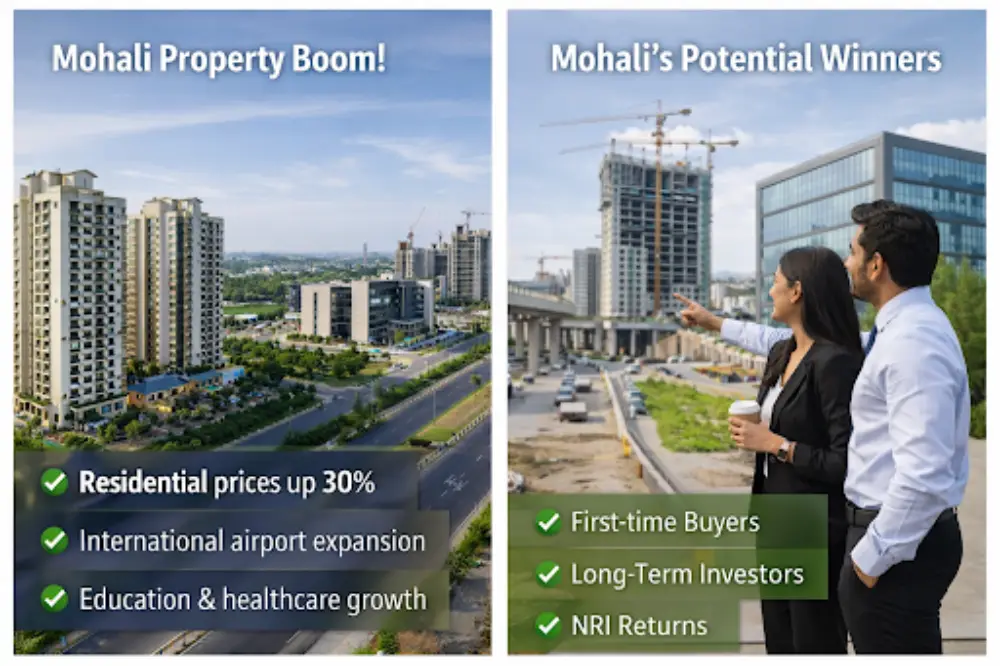
Over the last 12–18 months, Mohali’s real estate market has quietly but steadily picked up pace. This wasn’t just some random spike. After a sluggish period post-pandemic, transaction volumes started improving from mid-2024 and carried into 2025 with noticeable momentum.
Prices that had dipped or stagnated going all the way down to approximately ₹4,800 per sq. ft. in certain developing pockets have climbed to reach recent highs just shy of ₹7,500 per sq. ft. in premium locations near Aerocity and IT City. Within a span of about 24 months, Mohali property values in key sectors have rebounded by roughly 25–35 percent, depending on project type.
Here’s what blew my mind:
- ✅ Demand isn’t just end-users investors are back in a big way
- ✅ Inventory in good projects is tightening faster than expected
- ✅ Developers are launching fewer but higher-quality projects
But why now? What’s fueling this renewed performance?
The Bigger Picture: Why Invest in Mohali Is Rising
The current push to invest in Mohali isn’t happening in isolation. It’s coming against wider optimism in Tier-2 Indian cities. Here’s what’s really driving it:
1. Infrastructure Momentum Is Finally Visible
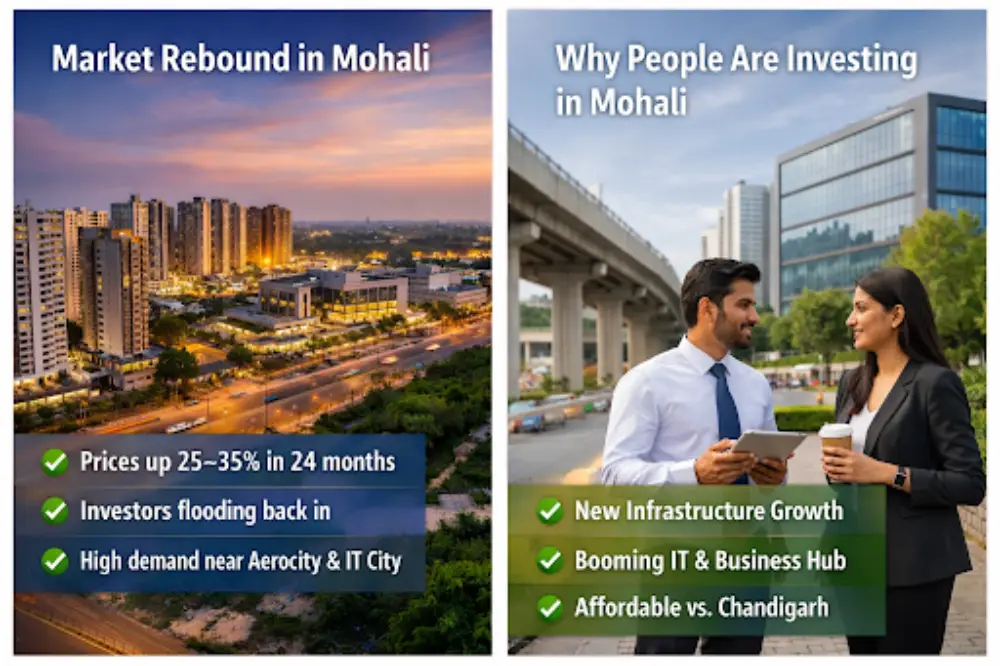
Look, infrastructure promises are easy to make but Mohali is finally seeing execution. Road connectivity improvements, expansion around the international airport, and smoother access to Chandigarh have changed daily life here. Local planning updates and coverage by national real estate desks have repeatedly highlighted how airport-adjacent sectors are outperforming others.
Also read : JK Industrial Package Set for Major Boost: Apex Committee Review Ahead
Data shared by regional real estate consultancies shows projects within a 10–12 km radius of the airport commanding a 10–15% premium. Think about it connectivity always shows up in prices sooner or later. Are we already seeing the early stages of that?
2. IT & Commercial Growth Is No Longer Just Talk
As several business parks and IT campuses expand, Mohali is benefiting from Chandigarh’s spillover effect. Reports from Indian tech hiring platforms suggest steady hiring growth in Mohali-Panchkula-Zirakpur belt, especially in IT services, fintech support, and SaaS operations.
And you know what? Rental demand followed. Average 2–3BHK rents in prime sectors have moved from ₹18,000–₹22,000 to ₹28,000–₹35,000 in just a couple of years. When rental yields rise, investor interest usually isn’t far behind.
3. Relative Affordability vs. Tricity Peers
Here’s the thing Chandigarh prices are already sky-high. Panchkula isn’t cheap either. Mohali still offers better space, newer construction, and lower entry prices. Long-term data from housing portals shows Mohali properties trading at 20–30% lower prices compared to similar units in core Chandigarh.
That gap is exactly what long-term investors look for. It doesn’t close overnight but when it does, returns can be meaningful.
Also read : Antilia: Mukesh Ambani’s House – Price, Address, Pictures, and Net Worth
So, What’s Next? ₹8,500, ₹10,000… Or Another Dip?
Let’s be honest: real estate is famously slow and occasionally unpredictable. But here’s what the signals suggest.
Market View / Where Things Stand
If Mohali can maintain transaction momentum through the next 12–24 months, price discovery could continue upward, especially in Aerocity, Sector 66-67, and IT City. Historically, cities that see sustained rental demand often experience delayed but durable capital appreciation.
A slowdown isn’t impossible, especially if interest rates spike again. But if buyers can tread water through short-term volatility, the long-term structure still looks solid.
Buyer Sentiment / What the Numbers Say
Housing portals have reported 20%+ year-on-year increase in listing views for Mohali at press time. Social media groups and NRI forums discussing “invest in Mohali” are noticeably more active. That doesn’t guarantee returns but sentiment matters more than people admit.
Why Invest in Mohali Is More Than Just a Number
Beyond price charts, Mohali has become the livability anchor of the Tricity region. You’re getting planned sectors, newer infrastructure, and less congestion. Families are choosing Mohali not just for affordability but for quality of life.
Professionals working hybrid jobs prefer larger homes here. Retirees like the calmer pace. And investors? They like cities that quietly grow while everyone else is distracted elsewhere. This mix creates a demand base that isn’t overly speculative and that matters.
Also read : BBMP Property Tax: A Complete Guide for Bengaluru Property Owners
Could Mohali Outperform Other Tier-2 Cities?
It’s a big question. Cities like Indore, Jaipur, and Lucknow are all competing for investor attention. But Mohali has one unique edge it’s directly linked to an already-established capital ecosystem.
Historically, satellite cities tied to strong economic centers tend to age well. Think about Gurgaon two decades ago. Not the same scale, obviously but the pattern is familiar. If policy support and job growth stay consistent, Mohali could punch above its weight.
Tips for Investors: What Should You Watch Now?
Keep an eye on project delivery timelines delays kill returns.
Track rental absorption, not just sale prices.
Watch interest rate policy closely it affects affordability fast.
Follow commercial leasing announcements in IT City and Aerocity.
And don’t ignore developer reputation that’s half the battle.
The Real Risks Here
Nothing’s guaranteed. Regulatory changes can slow launches. Over-supply in certain micro-markets could cap short-term gains. And real estate liquidity? It’s still not stocks you can’t exit overnight.
There’s also execution risk. Promises are great. Delivery is everything. That’s why due diligence isn’t optional here.
What’s your take? Share your thoughts in the comments!
The Quick Numbers Rundown
- Average price: ~₹5,500–₹7,500 per sq. ft. (per major housing portals at press time)
- Typical 3BHK value: ₹75 lakh–₹1 crore
- Rental yields: ~3–4% in prime sectors
- Demand trend: Rising steadily since 2024
Beyond the Hype: Real-World Adoption
What really matters long term is people actually moving in. School admissions, hospital expansions, and retail footprints are all growing. Local business data shows increased registrations year over year.
NRIs are also quietly returning not flipping, but buying for family use. That kind of demand tends to be sticky. And sticky demand is what stabilizes markets when cycles turn.
Why Now Could Be Different?
Look, plenty of investors remember stalled projects and slow appreciation in the past. But today’s Mohali is different.
First, infrastructure delivery is visible.
Second, job growth is real, not speculative.
Third, buyers are more informed and cautious.
Fourth, macro policy is pushing development beyond Tier-1 cities.
That combination didn’t exist a decade ago.
Final Thoughts
Invest in Mohali isn’t a flashy overnight story. It’s a slow-burn growth narrative built on infrastructure, jobs, and livability. That’s not exciting but it’s often profitable.
₹1 crore properties becoming common in premium sectors isn’t guaranteed, but it’s no longer unrealistic either. Still, patience matters here.
Volatility, delays, and surprises are part of real estate. Do your own research, visit sites, talk to locals and invest with eyes open.